
Save The Bees: 11 Tips for Native Bee Conservation


Are you curious about how you can take action to protect and conserve ALL bees, including native bees? Are you looking for the best tips and actional steps to save native bees in your area? Considering native bees in our gardens, yards, and beyond is one of the most important things we can do for global food systems and biodiversity conservation.
Imagine a world without the vibrant hum of buzzing wings, the explosion of colorful wildflowers dotting our landscapes, or the bountiful harvests from our gardens and farms. That’s the potential reality if we fail to protect our native bee populations. These tiny, often overlooked creatures are the lifeblood of our ecosystems and tireless pollinators that ensure the reproduction of countless plant species.
Native bees are diverse, encompassing thousands of species with unique adaptations and roles. From the fuzzy bumblebees that brave the cold temperatures in Alaska and British Columbia to the delicate blue orchard mason bees that pollinate our fruit orchards, stingless Asian bees, and the cute teddy bear bee in Australia, native pollinators are intricately woven into the fabric of our natural world. They’re responsible for pollinating our favorite fruits and vegetables and supporting the growth of native plants that provide food and shelter for many wildlife.

Sadly, these vital pollinators are facing an unprecedented crisis. Habitat loss, driven by urbanization and intensive agriculture, is shrinking their foraging grounds and nesting sites. The widespread use of pesticides, designed to eliminate pests, inadvertently harms or kills bees, disrupting their delicate life cycles. Climate change further exacerbates these challenges, altering flowering times and disrupting the synchrony between bees and their floral resources.
The consequences of declining bee populations are far-reaching. Reduced pollination can decrease crop yields, impacting food security and agricultural economies. It can also disrupt the delicate balance of natural ecosystems, leading to the decline of native plant species and biodiversity loss.
But there’s hope. We can reverse this trend and create a world where native bees thrive. By making simple changes in our gardens, communities, and lifestyles, we can provide these essential pollinators with the resources they need to survive and flourish. This isn’t just about protecting bees; it’s about safeguarding the health of our planet and ensuring a sustainable future for all.
One of the things I love most about native bees is that there are at least 20,000 known native species worldwide. However, it is estimated there are at least 30,000, with many undiscovered.
Each has evolved over 120 million years to specialize in pollinating diverse plants across their home region. These tips are general for supporting native bees, but each continent and global region has individual species with specific needs.

*All images have been sourced from a paid stock image service called Canva, sourced from Wikimedia Commons and attributed, or are owned by the author.
Save the Western honey bee or save ALL the bees?
What comes to mind when I say, “Save the bees?” Many of us will likely recall the Western honey bee. Western honey bees (also called European honey bees) are naturally found in Europe, The Middle East, and parts of Africa.
They have been introduced worldwide for their ability to produce large yields of honey and their role in agricultural pollination. They are now found on every continent except Antarctica, cared for by humans, and considered livestock.
Many people overlook native bees by focusing solely on protecting Western honey bees for economic benefits or taking up beekeeping as a hobby to “save the bees.”
As generalists, high densities of Western honey bees can increase competition between native pollinators and forage. They are also excellent at pollinating invasive species in North America, like the highly flammable Scotch broom.
Native bees are generally more efficient and resilient pollinators. Native pollinators are so important that we rely on them for 75-95% of all flowering plants. Despite this, they are at greater risk than the money-making honey bees, as they are understudied, often misunderstood, and not directly cared for by humans.

It is essential to think about saving ALL bees. Yes, it is crucial to understand that many beekeepers and food systems now rely on Western honey bees. Still, I can’t deny their impact on native plants and bees. We must care for and consider native bees that help pollinate our local foods, produce unique kinds of honey, and support most of our native wild plants.
This isn’t a Western honey bee vs. all native bee sentiment; instead, we need to approach bee conservation to benefit diversity in pollinators, protect native plants and ecosystems, support our food systems, and consider the economic benefits of beekeeping. Doing so allows us to be mindful of the incredible bee diversity that makes Earth unbelievable.
Meet a Native Bee from Every Continent
Before we get into our essential tips for saving native bees, I want to introduce you to a native bee on every continent.
Europe
Well, I think we are well acquainted with the Western honey bee by now, but there are many great bees across Europe. Europe has about 2,500 identified wild native bees.

Bombus monticola, or mountain bumble bee, is a bumble bee found only in Europe. It lives in most mountainous or high alpine regions, from the lower Alps around Germany to the mountains of Fennoscandia, the high and moorlands of the United Kingdom, and even the Pyrenees. They are pollen collectors often found on tundra and flowering brushes in higher elevations such as bilberry, cranberry, and cowberry and are key in alpine plant pollination.
Oceania
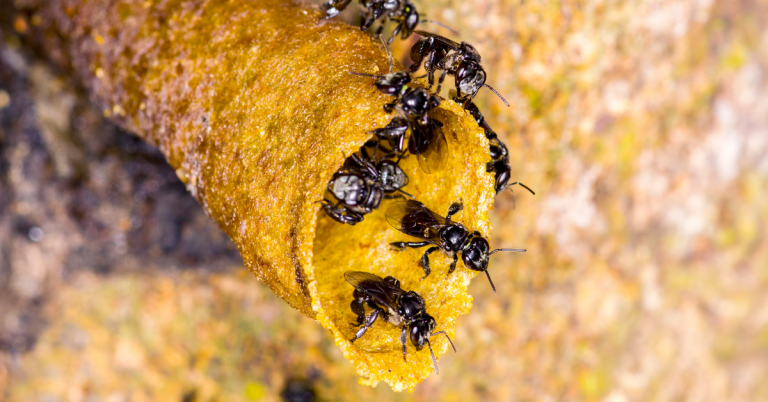
Australia has about 1,700 known species of bees. A few native stringless honey bees, like the black Tetragonula Carbonaria, specialize in pollinating and producing honey from native flowers. Indigenous custodians have harvested wild honey from these native bees for 65,000 years. This prized sweet treat is called a sugarbag. While these bees produce less honey than the Western honeybee, they efficiently pollute native flora across Australia.

There has been a local effort to revitalize honey production from native bees. Although they produce less honey than Western honey bees, their honey is a different product (watery, with different pH level, but still tasty!).
North America
North America has a lot of native bees, with nearly 4,000 identified species. The Blue Orchard Mason Bee, Osmia lignaria is a metallic bluish-green body with a back tuft. Like all mason bees, they are solitary and have hairy bellies. You can spot the female with bright yellow pollen clinging to their hairy underside.

Mason bees are named for their habit of using mud or other “masonry” products in constructing their nests. Orchard mason bees are incredibly important for pollinating North America’s orchards and fruit-bearing trees.
Asia
Asia is a bee haven, and recent evidence suggests there might be up to 14 native honey bees across Asia. With 15% of global bee diversity, it is home to both dwarf and giant honey bees.
The black dwarf honey bee, or Apis andreniformis, is a rare bee endemic to the tropics and subtropics of Southeast Asia. These bees make single-comb nests hanging from twigs and branches.

These native honey bees were culturally important in for their honey and royal jelly before the introduction of the Western honey bee and are key pollinators for the diverse tropical forest systems in Southeast Asia.
South America
Many continents have native stingless bees, but South America has at least 500 species, with more than half of those found in Brazil. The dog bee, or Trigona spinipes, forms colonies of up to 10,000 workers constructed in Brazil’s trees or urban buildings. They won’t sting you but will swim and intimidate people by “buzzing in their hair.”

They are highly efficient pollinators, recognized as critical pollinators for water lilies native to Central America and Brazil. Their honey has been used in traditional medicine for years. However, most consider it no longer consumable in order settings as nests may be constructed from dung.
Africa
The Africanized honey bee is one of Africa’s most well-known bees. This subspecies of the Western honey bee native to Eastern Africa is an important species for African beekeepers and pollination, but let’s highlight a lesser-known species!

The West African Slender-Stingless bee, or African dactylurina, is one of Africa’s native bee species. These bees are incredible, with slender bodies and large back legs carrying large protruding pollen clumps. They construct nests that hang from the underside of branches and form colonies. These bees are typically found in Western Africa in places like the Ivory Coast.
11 Top Tips for Doing Your Part to Save Native Bees!
1. Speak up for pollinators and their habitats
Habitat loss is one of the top risks to native bees. As urban expansion, agricultural development, and the spread of invasive, non-native species chip away at native meadows, forests, and other critical habitats for bees, they are losing their homes and the native plants they rely on in a rapidly increasing space.
Perhaps the most critical thing we can do is advocate for native habitat conservation and protect the local ecosystems native bees rely on.
While you might not feel directly responsible for land conservation, your voice matters, no matter where you live.

To get started, look up local conservation initiatives and development proposals in your community. Consider attending a public hearing, completing surveys, writing to your local representatives, donating to environmental or Indigneous groups, and protesting problematic development. Demand development and agricultural systems include space for native pollinators.
Beyond that, talk to your friends about native pollinators. The more we spread awareness among our friends— whether they have balcony flower pots, patios with flower boxes, or community gardens— the more we give our buzzing neighbors a fighting chance.
2. Plant a garden with diverse flowers and native plants
During a native pollinator walk held in Vancouver, Canada, I learned the necessity of planting diverse plants. When thinking about what to grow in your garden, you’ll want a range of plants, from early spring bulbs and flowers to bold summer colors, lingering autumn blooms, and even winter plants for those flies! Yes, flies are important pollinators, too!
Bees have unique methods of collecting pollen, body shape and size, and tongue length, so you’ll want to host a variety of plant shapes, colors, and depths. Each different shape or type of flower you have can support a different type of bee.
Generally, bees like blue, violet, purple, white, and yellow flowers. They cannot see red. Butterflies are attracted to bright blue, pink, red, yellow, and purple shades—night pollinators, such as moths, like pale and light-colored flowers. Most do not like dark colors, such as black or dark red.

Also, it can be beneficial to focus on incorporating native plants first before building out your garden with non-invasive, non-native plants.
If an option in your area, head to your local garden store early in the season to discuss planning your garden. My local store has excellent signage for pollinator-friendly plants and knowledgeable staff to make planning easier. There are also likely local conservation groups selling native seed packs for your region.
3. Challenge preconceived notions of “healthy”
Many of us from Western/Colonial countries grew up with certain expectations of a healthy garden or yard: big, sprawling lawns and perfectly manicured gardens with exotic and foreign ornamental plants.
Challenge this concept by discovering the beauty of incorporating native plants in your garden. To minimize your grassy lawn, try hosting a pollinator zone or wildflower garden on a section. Embrace the occasional dandelion and clover.
Allow room for your garden to find its rhythm. Rather than reacting instinctively to the presence of a native wasp or what you might consider a pest, identify the species using the app iNaturalist. Then, determine the species’ ecological niche to learn about its potential benefits.

If you notice aphids, before going to war with them, wait and see if some ladybugs naturally show up, or maybe some ants or wasps will take care of those buggers.
Embrace holes in leaves, as leafcutter bees or other beneficial caterpillars might use to build nests or become big and strong pollinators like butterflies.
While some pests may need to be managed after identifying them, not every bee, wasp, or pollinator is a danger to you. Give pollinators a chance and embrace slow and thoughtful gardening that challenges your preconceived notions of a successful garden.
4. Be a lazy gardener
Another benefit to hosting more native plants and reducing your lawn is that they require less maintenance. You can fully embrace being a lazy gardener because it also benefits pollinators!
If you have a larger yard or garden in places with seasonal deciduous trees that drop their leaves, consider leaving a light covering of leaf litter. This adds nutrients, and many pollinators rely on the warm insulation to overwinter under the litter.
Did you know that 70% of the 20,000 native bee species nest in loose soil, sand, or burrows? Even bumble bees are ground-dwelling, which is why you often see bumble bees in soft dirt patches. Avoid tilling and compacting your soil to ensure they can access their nests, and bumble queens can quickly burrow to start a new colony every year.

Avoid mulching areas suitable for ground-nesting with impenetrable materials like wood chips and fabric, as these can prevent many species of native bees from making their homes.
If you have berries or plants with hollow tubes or stalks when they die—raspberries, elderberries, or yarrow are great examples—allow the stalks to remain. Solitary bees such as mason bees may turn these into homes!
Finally, if you have a lawn, mow less often or raise the cutting height to allow the occasional weed to bloom.
5. Skip the pesticides
My greatest achievement was getting my dad to stop using Roundup on his perfect lawn. These at-home pesticides can cause ecological and health disasters for us and our friendly pollinators. Not only can they leak into the ground and kill entire families of ground-nesting bees, but they harm colony bees that may bring back chemicals on pollen to their hives.

A straightforward way to reduce the need for pesticides in your garden is to use ‘sacrificial plants’ that attract pests from other plants. Learn about companion plants that work together to reduce pests. Finally, look for natural solutions like bio-soap, water, or other natural substances.
6. Support local organic farmers
Buying local produce is a tremendous way to help our native pollinators. Many small local farms understand the importance of native bees and pollinators in biodynamic and organic agricultural systems. Head to your local farm market, look for local organic produce at your supermarket or head to a local farm for a fun agritourism day to buy directly from the farm.
7. Create homes and thriving environments
If you want a hands-on approach, you can create (or buy) manufactured bee habitats and rear mason bees or solitary bee species in your region. Just ensure you are ready to maintain them, as they must be properly cleaned to avoid spreading parasites to bees.

Bees need lots of fresh water. Ensure your garden, balcony, or patio has fresh water for thirsty pollinators, especially during dry, hot summers and droughts. Bees need shallow, easily accessible water to avoid drowning.
Be kind to native bees. Many don’t want to hurt you, and many are stingless and less aggressive than Western honey bees. It is important to find ways to coexist with native bees and give them space to thrive.
8. Learn about native bees in your region
As we mentioned earlier, there are at least 20,000 native bee species worldwide. Every region has a plethora of native bees that have adapted to unique native plants and habitats. It is so important to take the initiative to learn about native bees in your region.

Whether in Asia, Africa, Europe, Oceania, or North or South America, you can learn about native bees in your region. Find resources to understand the nesting habitats, threats, native plants, and ecosystems your unique bees rely on. Tailoring your actions to the specific bees in your country or contingent will go a long way in taking action.
9. Mind your invasives
Invasive plants don’t sound like a big deal. However, they are often very competitive generalists that can survive in various environments. As invasive plants spread, they choke out native plants that native bees rely upon. This creates a vicious cycle, as native plants rely on native bees, and native bees need native plants.
The spread of invasive plants reduces native plants, which in turn reduces native bees and further reduces native plants. This ripple effect is felt throughout a region’s ecology web.

Many invasive plants escape gardens or are spread by hikers and recreational activities. Your garden doesn’t need to be 100% native plants, but certain invasives are listed by your government as species of great concern to avoid. Be mindful when planting non-native plants.
Clean your boots and gear as you hike, boat, or engage in recreational activities to prevent the spread of invasive plant species.
10. Pollinators beyond bees
Native bees are important pollinators but are just one piece of a complex pollinating ecosystem. As you advocate for bees or create garden and yard spaces considerate of bees, think of other pollinators, like:
- Native butterflies are key pollinators in many parts of the world. To support butterflies, look for flowers adults pollinate and species their caterpillars need, like Milkweed for monarchs.
- Hoverflies are essential pollinators; you’ll notice these tiny bee-like insects ‘hovering’ over your flowers.
- Most wasps are omnivores and require high-energy food like nectar. They are great for pollination and pest control.
- Beetles are attracted to the flowers of the parsley and celery plants and play a role in their life cycle.
- Snails can even pollinate by frequently stopping for snacks; pollen gets stuck on and transferred by their slimy bodies. They also aid in the reproduction of ferns.
11. Get involved and try citizen science
Another hands-on approach is to get involved in bee conservation. Look to your local community for workshops that host projects like building bee hotels or educational events.
Volunteer with your local ecology group to help remove invasive species. Meetup is a surprisingly good place to find volunteer projects led by ecology groups.
If you have the financial means, you can donate to environmental groups focused on native bee conservation in your region.

Another way to stay engaged is by sharing sightings of bumble bees. Contribute to data collection and sightings across North America with the bumble bee watch.
You can join a bee monitoring citizen science project or take photos of the pollinators in your yard and upload them to iNaturalist to learn more about what’s in your yard and contribute to the app’s data collection.
Bonus: Spread the Word!
We hope you enjoyed learning about the importance of native bee conservation. These 11 tips for supporting and protecting native bees worldwide can create meaningful and necessary change to save bees and pollinators.
Their important role in biodiversity health and agricultural and food production systems is no small part.
Share this post with your friends and families to spread the word about native bees!